
Brandon Yang
Golfer · Founder · Student
Golfer · Founder · Student


I'm a student at St. Margaret's Episcopal School in San Juan Capistrano, and most of what I do traces back to one place: the golf course. Not because it's comfortable — because it taught me what happens when you refuse to stay comfortable.
Golf didn't just teach me discipline — it taught me that discipline compounds. The same intensity it takes to grind out a three-hour practice round in 95-degree heat is the same intensity it takes to build a nonprofit from a Google Doc into a 501(c)(3), or to turn a brand concept sketched on a napkin into real product on real shelves. I captain my varsity team, co-founded a nonprofit that's put over $10,000 into underserved communities, and built an apparel brand from the ground up — every one of those started with the same question golf asks you every day: what are you willing to work for?
Academically, I'm drawn to economics — not the textbook kind, but the living kind. How markets shape the decisions people don't even realize they're making. How policy creates winners and losers before anyone swings a club. How growth can be designed to serve more than just the people at the top. I've written analytical papers on sustainability and consumer ethics, co-founded my school's Economics Club, earned Highest Distinction in the World Economics Cup, and spent a summer at Yale Young Global Scholars surrounded by people who think as hard as I do.
Off the course I play violin, travel whenever I can, and spend a lot of time at my family's mahjong table — which, as it turns out, taught me more about behavioral economics than most classrooms ever could.

I've played competitive golf for most of my life — early mornings, late range sessions, tournament weeks where every stroke feels like it weighs something. AJGA events, CIF postseason play, and three years on St. Margaret's varsity team, the last two as captain. This isn't a hobby line on a résumé — it's the foundation for how I think about pressure, preparation, and growth.
As captain, I don't just show up and play. I design practice plans, run player development sessions, and build the kind of culture where freshmen feel like they belong and seniors feel like they're leaving something behind. We won the Orange Coast League title in 2023–24 and the Pacific Coast League title in 2024–25 — back-to-back championships built on accountability, not talent alone.
But the sport is bigger than trophies. Golf is where I learned that the best version of yourself shows up when no one's watching — on the range at 6 a.m., in the quiet between shots, in the choice to stay honest with your scorecard when no one would know the difference. It's the community behind my nonprofit work, the culture behind my brand, and the discipline behind everything I build.

Champion Minds is the 501(c)(3) nonprofit I co-founded and lead as CEO — born from a simple conviction: every kid deserves the mentorship, equipment, and opportunity that sport can unlock, not just the ones whose families can afford it.
We don't just write checks. We show up. We've organized equipment drives that put real gear into the hands of kids who were borrowing or going without. We've built school chapters at Northwood High and Sage Hill High, creating student-led pipelines for mentorship and service. We've partnered with the Boys & Girls Club of Santa Ana for hands-on programming — not photo ops, but real hours with real kids. And when the Eaton Fires tore through Los Angeles, we raised $5,000 for LAFD recovery in a single campaign because standing on the sidelines wasn't an option.
Across all of it, the through line is student-athlete mental health. The pressure young athletes face — to perform, to specialize, to be perfect — is something I know personally. Champion Minds exists to make sure no one navigates that alone. Over $10,000 raised, 250+ volunteer hours logged, and we're just getting started.


GolfNoGolf is the apparel brand I founded in 2024 because I got tired of the false choice: you're either dressed for the course or dressed for real life. Why not both? Golf, no golf — clothing that moves between worlds without apologizing for either one.
I run every side of this business. Product design, sourcing, production timelines, brand identity, marketing strategy, e-commerce — all of it. No investors, no advisory board, no safety net. Just a vision for what modern golf fashion should look like and the willingness to figure out every part of making it real.
This is where the economics I study stops being theoretical. Branding isn't an abstract concept when you're A/B testing your own product photography. Consumer behavior isn't a chapter in a textbook when you're watching real people decide whether your polo is worth their money. GolfNoGolf is my laboratory — and the lessons hit different when your own capital is on the line.
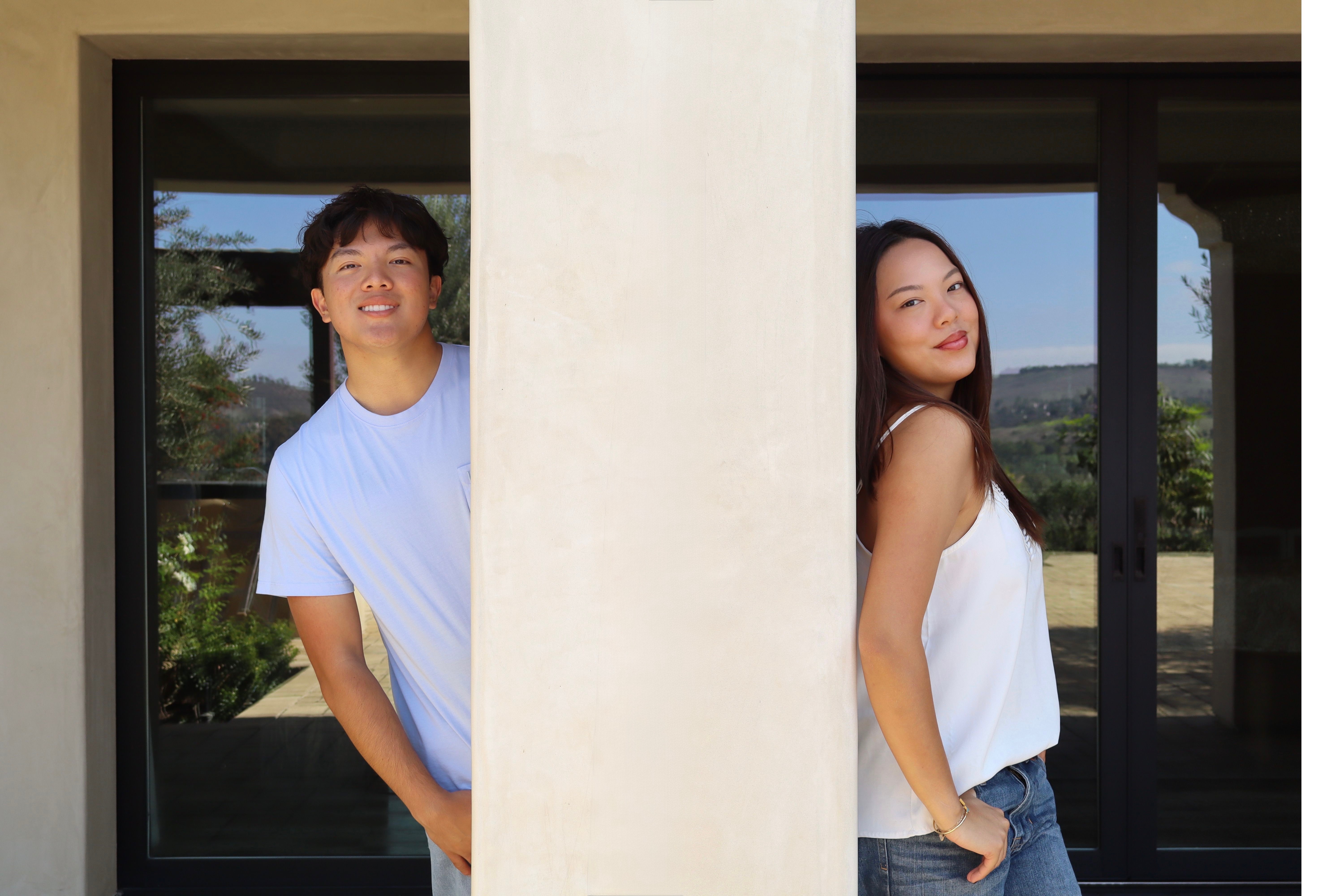


Economics is the lens I use to understand almost everything — and I mean everything. Markets, behavior, policy, sustainability, even the tile games my family plays on Saturday afternoons. My focus is behavioral economics: the gap between how people should decide and how they actually do, and how smart policy and market design can close that gap in ways that serve long-term social good.
I spent summer 2025 at Yale Young Global Scholars in New Haven — two weeks surrounded by some of the sharpest students I've ever met, debating questions that don't have clean answers. I earned Highest Distinction in the World Economics Cup, placing in the top 5% globally across macro, micro, and global economic concepts. And at St. Margaret's, I co-founded the Economics Club — not as a résumé line, but because I wanted a space where students could wrestle with real case studies, prep for competitions, and argue about ideas that actually matter.
The writing below is where that thinking lives — from a formal research proposal on the ethics of lab-grown diamonds to an essay about what Taiwanese mahjong can teach you about loss aversion, mental accounting, and the gap between knowing better and playing better.
What Taiwanese mahjong taught me about loss aversion, mental accounting, game theory, and the gap between knowing better and acting better. A behavioral economics masterclass hiding in a family tradition.
Read on Medium Research ProposalA phenomenographic study of how Gen Z and Millennial consumers navigate ethics, ESG disclosure, and symbolism in the engagement ring market — where sustainability values collide with tradition.
Read the proposal Essay · MediumA research-driven look at mahjong's cognitive science — from dementia prevention in older adults to executive function development in children — and why the same 144 tiles might be the most underrated brain exercise at every stage of life.
Read on Medium

Away from the course and the classroom, I'm someone who can't sit still — and I mean that in the best way.
I've played violin for years, reaching Certificate of Merit Level 7 in California's state performance evaluations. There's a precision to music that mirrors the precision of a good golf swing — the hours of repetition, the pursuit of something you can feel but can't quite name, the moment it finally clicks.
Most Saturdays you'll find me at the mahjong table with my elders — four generations of strategy, trash talk, and life advice disguised as tile discards. That table ended up teaching me more about behavioral economics than any classroom, and it became the subject of one of the essays I'm proudest of.
And travel is how I reset. From beignets at Café Du Monde in New Orleans to the thundering mist of Victoria Falls, seeing how the rest of the world lives — how people eat, build, argue, celebrate — is its own kind of education. One that no GPA can measure.


In mahjong, your hand is defined by what you hold onto. Turn the tiles over.